Reviewing the Funny Sun SVG for Real Embroidery Use
As a designer who spends half my life digitizing files and the other half stitching them out, I have learned that a pretty graphic does not always translate into a clean embroidery project. When I first opened the Funny Sun Svg, my initial reaction was one of cautious optimism. The character has personality, but personality in vector art can sometimes mean messy corners or impossible stitch paths when transferred to fabric. My job here is to look past the screen and evaluate how this design holds up under the needle, specifically for those of us running small shops or creating personalized gifts.
First Impressions and Visual Personality
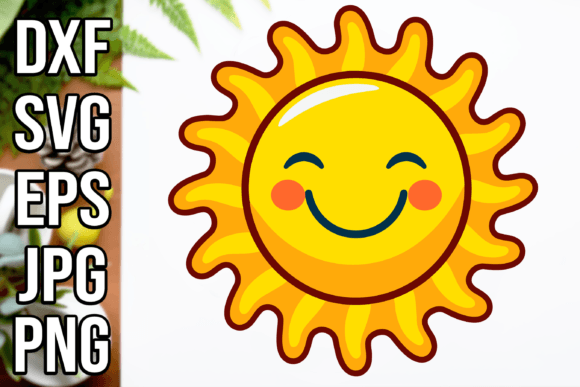
The mood of this design is undeniably cheerful. It captures that quirky, hand-drawn aesthetic that is currently dominating social media feeds and boutique storefronts. For an embroidery designer, the immediate question is about line weight and negative space. The Funny Sun Svg features bold outlines and expressive facial features. In the world of Crafts and digital Graphics, this simplicity is a strength. Complex gradients do not work in thread, so a design that relies on strong shapes and clear contrast is essential. The layout feels balanced, suggesting that it will sit well in a standard hoop without looking cramped or lost.
I appreciate that the file package includes an EPS file customizable in Illustrator. This is crucial for professionals. Before I ever load a file into my embroidery software, I need to inspect the nodes. A clean vector path means fewer jumps and smoother satin stitches. If you are selling custom apparel or handmade products, you cannot afford to guess at the quality of your source file. Having the ability to tweak the curve of a smile or the angle of a ray in Illustrator before converting it to a stitch file gives you a significant edge in professionalism.
Real-World Application: The Tote Bag Test
To truly understand the value of this asset, I imagined a specific scenario: a summer collection for a local boutique. The item in question is a heavy canvas tote bag design. Canvas is forgiving, but it is also textured. I visualized placing the sun slightly off-center, perhaps near the bottom corner, to create a modern, asymmetrical look. The high-resolution PNG included in the pack allows for quick mockups. I dragged the transparent background PNG onto a photo of a natural cotton tote. The result was promising. The white background JPEG is less useful for dark fabrics, but the transparent PNG saved me time in Photoshop.
For a sweatshirt embroidery project, the considerations change. Fleece and French terry are plush. If the design has too much fine detail, it gets swallowed by the pile. However, the bold nature of the Funny Sun Svg suggests it would pop nicely against a pastel hoodie. The key here is stabilizer. I would recommend a cut-away stabilizer for any garment that will be washed frequently, ensuring the design does not pucker over time. This is where buyer trust is built. A customer might buy a cute shirt once, but they return to a seller whose items hold up after ten washes.
Navigating Fabric and Hoop Constraints
Not every surface is ideal for every design. While this sun is versatile, there are places where I would hesitate to use it without significant modification. For instance, on a curved surface like a cap, the outer rays of the sun could distort if the hoop is not perfectly centered. Caps require precise digitizing to account for the push and pull of the fabric. If you are new to embroidered patch creation or hat decoration, start with a smaller version of this design to test how the curves behave.
Similarly, thin fabrics like silk or lightweight rayon present a challenge. The stitch density must be managed carefully. If the original digitization is too dense, it will perforate the fabric, leaving permanent holes. If it is too light, the backing will show through. This is why testing on scrap fabric is non-negotiable. I always run a test stitch-out on the actual material I plan to use for the final finished product. Check your thread colors against the fabric. A yellow sun on a white shirt might lack contrast, whereas the same design on navy blue creates a striking visual impact.
Commercial Viability and Brand Consistency
For Etsy sellers and craft business owners, consistency is brand currency. Using a cohesive set of design assets helps customers recognize your shop. The Funny Sun Svg fits well into a broader theme of whimsical, nature-inspired decor. It works for baby embroidery on onesies, provided the size is scaled down appropriately to fit a 4x4 hoop. It also serves well for holiday embroidery projects, such as summer-themed kitchen towels or picnic blankets.
The inclusion of DXF and SVG files means this is not just for embroidery machines. You can use these same vectors for heat transfer vinyl (HTV) or sublimation, allowing you to offer mixed-media products. This versatility increases the perceived value of your small shop product lineup. However, always confirm licensing before selling. While the description mentions commercial use potential, you must ensure you have the right to sell physical items made with this design. Most reputable designers allow this, but reading the terms is part of being a professional.
Practical Designer Notes for Best Results
- Test Stitch Density: Always run a test on similar fabric weight. Adjust underlay stitches if the design shifts.
- Check Contrast: Use the black and white mockup technique. If the design disappears in grayscale, it lacks sufficient contrast for distant viewing.
- Hoop Size Matters: Ensure the design fits comfortably within your hoop with at least one inch of margin for clamping.
- Stabilizer Selection: Use tear-away for stable woven fabrics and cut-away for knits and stretchy materials.
- Thread Choice: Polyester threads offer better durability for items like tote bags and aprons that undergo frequent washing.
In conclusion, the Funny Sun Svg is a solid addition to a designer’s library. It is not just a cute image; it is a functional tool for creating engaging personalized gifts and retail items. Its success lies in its simplicity and the flexibility provided by the multiple file formats. By respecting the limitations of fabric and machine, you can turn this digital file into a tangible asset that drives engagement and sales. Whether you are decorating a pillow cover or branding a line of custom apparel, this design offers the clarity and charm needed to stand out in a crowded market.