Retro SVG Review: Stitching "Make Today a Good Day"
As an embroidery designer who has spent years translating digital vectors into tangible thread, I approach every new machine embroidery design with a mix of optimism and skepticism. We have all been there: you find a cute graphic online, load it onto your machine, and watch in horror as the threads bunch up or the details vanish into the fabric. Recently, I came across a file titled Funny Retro SVG Make Today a Good Day. While the listing explicitly markets this as a cut file for Cricut or Silhouette machines intended for t-shirts, mugs, and signs, my mind immediately went to the needle. Could this retro-styled graphic translate into a high-quality embroidery project? I decided to put it through its paces to see if it holds up under the presser foot.
First Impressions: Mood and Visual Personality
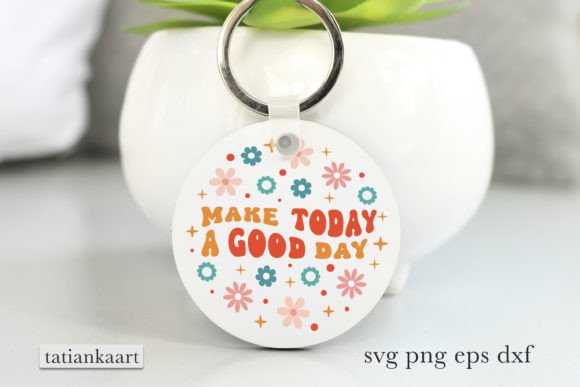
The immediate appeal of Funny Retro SVG Make Today a Good Day lies in its typography and layout. The "retro" aesthetic usually implies rounded sans-serif fonts, warped text baselines, or groovy seventies-inspired curves. In the context of Crafts and Graphics, this style is currently dominating social media feeds. For an embroiderer, this presents both an opportunity and a challenge. Rounded, thick letterforms are generally friendlier to stitching than thin, serif-heavy scripts because they allow for consistent fill stitch coverage without excessive density.
The phrase itself—"Make Today a Good Day"—is universally positive but not overly sentimental. It fits perfectly into the current trend of mental health awareness and gentle positivity. When I visualized this on a custom apparel piece, I imagined it sitting comfortably on the left chest of a hoodie or centered on a canvas tote. The mood is casual, approachable, and slightly nostalgic, which makes it a strong candidate for a handmade product that appeals to a broad demographic.
Real-World Application: From Screen to Stitch
To test the viability of this design, I considered a specific real-life scenario: creating a line of sweatshirt embroidery items for a local boutique client. The client wanted something that felt modern yet timeless. I imported the SVG into my embroidery software to assess how the vector paths would convert to stitch data. Since the original file is a cut file, it lacks inherent stitch information, meaning the digitizer (you) has full control over the outcome. This is a double-edged sword. You can optimize it perfectly, but you can also ruin it if you ignore the nuances of stitch density.
I envisioned this design on a mid-weight cotton fleece. The retro curves would look excellent with a satin stitch border and a tatami fill for the larger letters. However, smaller connecting elements might require a running stitch to prevent puckering. If you are planning to use this for a tote bag design, the durability of the stitch becomes paramount. A dense fill might hold up well to heavy use, but it could make the fabric stiff. Balancing aesthetic appeal with tactile comfort is key here.
Navigating Technical Challenges
While the design is charming, there are areas where caution is necessary. Retro fonts often feature tight kerning or overlapping letters. In embroidery, overlapping elements can lead to excessive thread buildup, especially if you are using a satin stitch for outlines. If you attempt to stitch this on a small hoop size, such as a 4x4 inch hoop for a embroidered patch or a baby hat, you must simplify the design. Tiny details get lost in the texture of the thread.
Furthermore, consider the fabric texture. If you are stitching this onto a textured towel or a ribbed knit, the smooth lines of the retro font might distort. Using the correct stabilizer is non-negotiable. For stretchy fabrics like those used in baby embroidery or athletic wear, a cut-away stabilizer is essential to maintain the shape of the letters after washing. On dark fabrics, ensure your thread colors have enough contrast. A muted retro palette looks great on screen, but if the thread blends too much with the garment, the message gets lost.
Commercial Viability and Brand Consistency
For Etsy sellers and small shop product creators, the versatility of this design is a major selling point. It works for holiday embroidery gifts, back-to-school gear, or everyday personalized gift items. The positive messaging builds customer trust and enhances the perceived value of the finished product. When a customer sees clean, well-executed stitching on a popular slogan, it signals professionalism.
However, before listing this as a commercial embroidery item, you must verify the licensing. The product description states these are cut files for Cricut or Silhouette. It does not explicitly grant rights for commercial embroidery sales. As a responsible craft business owner, you must contact the creator or check the full license terms. Using a cut file for embroidery without proper clearance can lead to intellectual property issues. Always confirm whether the digital embroidery file usage is permitted for physical goods sold for profit.
Practical Designer Notes
Before you commit to a large batch of custom apparel, follow these steps:
- Test on Scrap Fabric: Always stitch out a sample on the same material you intend to use for the final product. Check for puckering or thread breaks.
- Check Thread Contrast: Use a printable mockup or physically lay thread spools against the fabric to ensure readability.
- Review Stitch Density: If digitizing from the SVG, reduce the density for larger fills to keep the garment soft and flexible.
- Inspect Small Details: Zoom in on your software. Are there any anchor points that are too close together? Simplify nodes if necessary.
- Confirm Licensing: Ensure you have the right to use this graphic for commercial design assets and finished goods.
In conclusion, Funny Retro SVG Make Today a Good Day has strong potential as an embroidery motif. Its retro charm and positive message align well with current market trends. However, success depends entirely on your digitizing skills and attention to technical details. Treat it not just as a graphic, but as a structural element that interacts with fabric and thread. With careful planning, this design can elevate your craft business offerings and delight your customers.